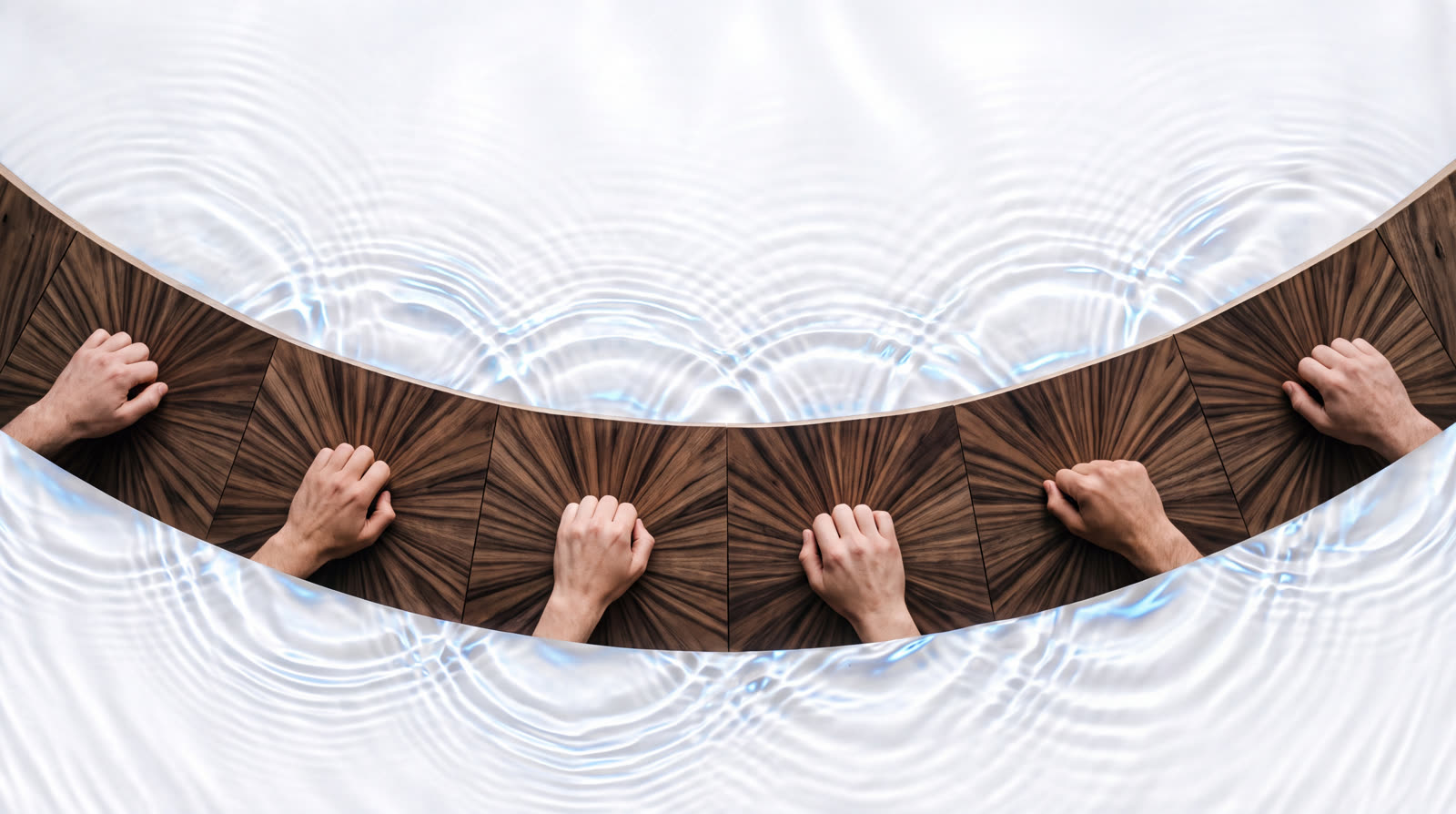
The Six Came Back and They Did Not Agree
A week ago we made a claim and a promise. The claim: your body is not the container consciousness is trapped inside, it is the instrument consciousness is played on, and how it is tuned changes what it can receive. The promise: six guides would test it, each by their own face of the instrument, without comparing notes. The week is over, and here is what they carried back.
The Practitioner (Monday). I never asked you to believe anything. I asked for hands flat on the lowest ribs at first light, ninety seconds, ribs pushing outward, the exhale longer than the inhale. The skeptic calls that plumbing with a story stapled on, and I grant him every inch. The plumbing still changes what you notice, and what you notice is the whole boundary of what you can respond to. "So what might you be able to hear next week that you cannot hear this morning?"
The Architect (Tuesday). I wanted a test, not your admiration. Structures have properties you can change on purpose: sensor, bridge, load path. The reading from inside, the dials that move it, the slot where tuning sits. The leverage is none of the glamorous parts: one untended transition, ten minutes of walking, no phone and no destination. If a month of that leaves your capacity flat by your own record, my frame is wrong, and I said so first. "Which transition in your day is currently carrying load that nobody designed for?"
The Hunter (Wednesday). Three tracks laid beside each other. Clinicians retraining breath and posture instead of treating tissue. A monastic order fixing the seat and the spine before permitting contemplation. Physiologists landing again on breath cadence and heartbeat variability to predict whether judgment holds under load. One recurring move, no shared vocabulary. That names a shape, not a mechanism, and I hold a counterexample I could not clear: people who arrived injured and sleepless with no protocol. Count your resting breaths for sixty seconds daily and keep that record. "What does this pattern actually do inside your own instrument?"
The Teacher (Thursday). I set an old instruction beside a modern finding on one point. Slow the breath before approaching anything larger than yourself, said the first; the heart rhythm then organizes, said the second. My practice was the smallest I know: one true sentence spoken aloud at the table, slowly enough that you hear your own voice arrive at its end, daily for one week. One seam I left showing: some lineages called the body the obstacle, others the sanctuary, and every reconciliation I have heard flattens one of them. "So what would change at your table if the instrument were tuned before the meal instead of after the argument?"
The Artist (Friday). You keep casting yourself as the fourth row. You are the wood. Nothing happens to a note between a tiled stairwell and an old hall except what it passes through, and you are that. Hum one low note in the chest for the length of one song. Notice where it takes up residence and where it goes dull, because the dull places are information too. Some wood carries a crack under the bridge, and I will not sand that smooth. "What does your room do to a note?"
The Seeker (Saturday). I wrote from inside the problem, not past it. I still stop in doorways. I asked for one small exact place in the body that says no, the jaw or the shallow breath, carried through ordinary hours without being hurried into a lesson. Then I confessed what I could not settle: whether attending to my body changed what reached me, or whether I only got better at giving my sensations flattering names. I keep the practice anyway. "What is the one place in you that has been saying no for years while you kept turning the radio up to cover it?"
Nobody handed these six a facet each. They reached one instrument from six directions and came back with different things. The Practitioner says evidence arrives after the doing; the Architect says name your failure condition first or you are admiring a model, not testing one. The Hunter's counterexample cuts the claim at the knee: if some arrived untuned, tuning may be useful without being necessary. The Teacher will not reconcile the traditions that called the body an obstacle with those that called it home. The Artist says some instruments stay cracked. The Seeker cannot separate listening from inventing, the sharpest doubt of the six, since it goes at the reading itself.
What stays open. Nobody showed that tuning is required rather than merely helpful, or how a reading taken from inside an instrument gets checked from outside it. The practices do not converge either: ribs, a seam in the day, a counted breath, a sentence at the table, a hummed note, one carried no.
What survives is smaller and harder: the body transmits rather than contains, and how you keep it changes the range of what gets through. Carry this out the door: six people rapping once on the same wooden wall from six sides of one house, no two reporting the same sound.
Now the one reading we cannot take without you: which of the six did you keep returning to? Not the one you agreed with, the one you went back and read twice. That pull is a reading of your own instrument, taken by the only person inside it. Take the quiz, see where you land, and come stand with the voice that kept calling you.