Why Do I Wake Up at 3am? What 167 Wisdom Books Say
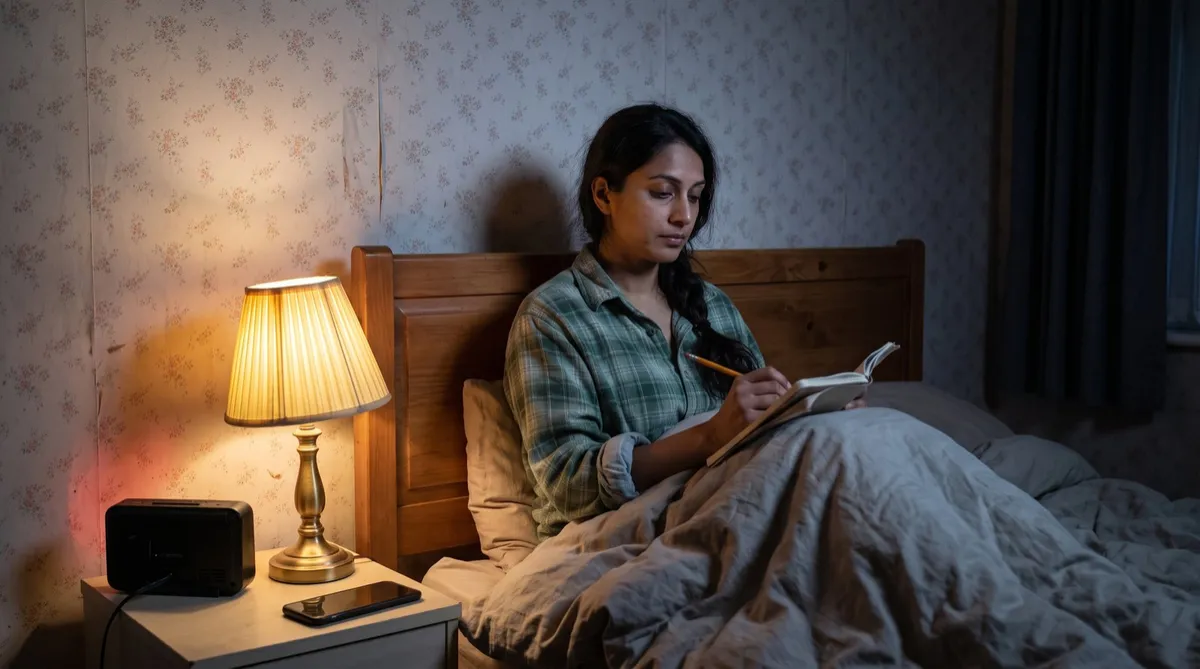
It is 3:07. The house is silent, your eyes are open, and you are already doing the math on how much sleep is left. Here is why you wake up at 3am: your body is turning toward morning, and the oldest books never called that hour a broken night. Several traditions rose into it on purpose.
Search the question and you get two answers. One side says your sleep is lighter now and your stress hormones are climbing, so get up after twenty minutes and fix your sleep hygiene. The other side says the veil is thin, the angels are calling, and 3:33 is a number with a message. Both treat the hour as something that happens to you. One calls it a malfunction. The other calls it an omen.
So you reach for the phone. You check the clock again. You start the fight, and the fight is what keeps you up.
We searched the Great Library of Light, 167 works across 13 traditions, for everything it holds on the night hours and on good sleep. What came back is stranger than either answer, and more useful. Below: what your body is doing, the people who chose this hour, why it feels so heavy, the question the traditions split on, and what to do tonight.
Your Body Isn't Broken at 3am. Here's What It's Doing
Sleep comes in cycles of roughly 90 minutes, and the second half of the night holds more of the light stages. Somewhere around 2 or 3 in the morning, the body also begins its slow chemical turn toward waking. A brief rise to the surface at that hour is ordinary. What decides whether you sink back down is what meets you when you get there.
Joe Dispenza puts the chemistry plainly in Becoming Supernatural, chapter 12: "there's an inverse relationship between our adrenal hormones and melatonin. As adrenal cortisol levels go up, melatonin levels go down." Carry a day of stress into bed and the stress hormones arrive first.
A writer roughly two thousand years older said the same thing in the language of the table. Sirach 31: "Sound sleep cometh of moderate eating: he riseth early, and his wits are with him: but the pain of watching, and choler, and pangs of the belly, are with an unsatiable man." The pain of watching is his phrase for lying awake. The Bhagavad Gita, chapter 6, asks for a life "avoiding too much or too little food, work, and sleep." Three sources, separated by centuries and continents, describe one night in two languages: what you carry into the dark decides how the dark goes.
The Spiritual Meaning of 3am Nobody Mentions
Here is something the spiritual meaning lists leave out. Not one of the 167 books we searched mentions a witching hour, angel numbers or a liver clock. What the books do describe is people who got up in the dark on purpose.
The Sikh scripture, the Shri Guru Granth Sahib, sets the time on its second page: "the ambrosial hours before dawn, chant the True Name." On page 305 it makes rising a mark of the path itself: "who calls himself a Sikh of the Guru, the True Guru, shall rise in the early morning." A whole tradition sets an alarm for the hours you dread.
The Buddha taught his monks to sleep the middle of the night on the right side, "mindful, alert, with his mind set on getting up," and to return to sitting and walking in the last watch. A monk named Sona left this line in the Theragatha: "The night, for one who knows, is for staying awake." And in the Mahasaccaka Sutta, the night the Buddha awakened, it was in the last watch that "the mind was released."
The Bhagavad Gita, chapter 2, turns the clock inside out: "During the time that is night to all beings, the God-realized person remains awake; when all beings are awake, it is night to the sages." None of these people were waiting to be woken. They chose the hour because it was the only one the world left quiet.
Why Everything Feels Worse at 3am (and What the Buddha Did About It)
There is a reason a small worry at noon becomes a catastrophe at 3am. The room is dark, nothing is moving, and the mind fills the empty space with the worst version of tomorrow. The waking is not the hard part. The fear that rides in with it is.
Before his awakening, the Buddha went looking for that fear. In the Bhaya-bherava Sutta, the discourse on fear and terror, he tells how he stayed alone in the frightening places of the forest and made himself one rule: whatever posture the fear found him in, he would not change it until the fear was gone. If he was walking, he kept walking. "I would keep walking back and forth until I had subdued that fear and terror." If he was lying down, he stayed lying down.
Read that again at 3am. The phone, the pillow flip, the trip to the kitchen are all ways of changing posture to get away from the feeling. He refused the escape, and the fear passed through him instead of chasing him around the room.
The Corpus Hermeticum adds a line that takes the pressure off the whole night. In the Poimandres, translated by G.R.S. Mead, Hermes says that "the sleep of the Body was the sober watchfulness of the mind." Rest and watchfulness were never opposites. A body lying still in the dark is resting, even while the mind is awake. You are not failing at sleep. You are keeping watch.
Get Up or Stay in Bed? The Oldest Books Can't Agree
This is where the traditions split, and the split is worth keeping.
One side says stay. The Tao Te Ching, chapter 15: "Who can make the muddy water clear? Let it be still, and it will gradually become clear. Who can secure the condition of rest? Let movement go on, and the condition of rest will gradually arise." The Buddha stayed in his posture. Psalm 4 promises the same quiet ending: "I will both lay me down in peace, and sleep."
The other side says rise. The Sikh path tells you to get up and chant. In Acts 16, two men in a prison cell did not wait for morning: "at midnight Paul and Silas prayed, and sang praises unto God: and the prisoners heard them." And the modern sleep clinic, oddly, votes with the risers: if you are awake longer than about twenty minutes, get out of bed and do something quiet.
Look closer and the two sides share more than they fight about. Neither one reaches for the phone. Neither one lies there arguing with the clock. The stillness of the Tao and the rising of the Sikh are both decisions. The only thing no tradition recommends is the thing most of us do: stay in bed and fight.
We are not going to settle the question for you. Your nights will tell you which side you are on.
How to Stop Fighting 3am Tonight
Something to do before something to believe. When you wake tonight:
Leave the phone and the clock alone. The math on how many hours are left is the first move of the fight. Skip it.
Let the water settle. Lie still and let the mind keep moving without chasing it. Muddy water clears when you stop stirring it, not when you scrub it.
If fear comes, stay where it finds you. Do not flip over, do not get up to escape it. Breathe, and let it pass through the way the Buddha did in the forest.
Send loving-kindness to one person. The Metta Sutta lists the fruits of this practice, and the first fruit it names is this: "He sleeps in comfort." Picture someone you love and wish them well. Then someone you barely know. Then someone difficult. It is very hard to wish a person well and dread tomorrow at the same time.
If sleep does not come back, give the hour to something. Sit up and use it on purpose: a prayer, a page, a few lines in a notebook, the question you have been avoiding. Samuel, called by name in 1 Samuel 3, gave the oldest answer there is: "Speak; for thy servant heareth." Either sleep returns or the hour becomes yours. Both are better than the fight.
Key takeaways
- Waking around 3am is your body turning toward morning; what keeps you awake is the fight that starts when you notice it.
- What you carry into the night decides the night: Sirach, the Bhagavad Gita and modern stress chemistry describe the same thing in different languages.
- Several traditions chose the hours before dawn on purpose; none of the 167 books we searched mention a witching hour or angel numbers.
- Stay still or get up are both honest answers. Reaching for the phone is not.
- Settle first, then answer: let the water clear, stay with the fear, send loving-kindness, and if sleep does not return, give the hour to something.
Picture a glass of river water on the nightstand. Shake it and it clouds. Set it down and do nothing, and in a few minutes you can see straight through it. The water clears on its own. Your only job tonight is to stop stirring it.
And if you would rather not lie there alone with the question, ask it out loud. Lumen, the AI librarian for Empire of Light, has every one of these books on its shelf and will walk the night hours with you. Your first 10 minutes are free.
Sources
- The Bible, 1 Samuel 3 (King James Version).
- The Bible, Psalm 4 (King James Version).
- The Bible, Sirach 31.
- The Bible, Acts 16.
- Shri Guru Granth Sahib, Jap, page 2, and Raag Gauree, Fourth Mehl, page 305, translated by Sant Singh Khalsa.
- The Bhagavad Gita in the Light of Kriya Yoga, chapters 2 and 6.
- Bhaya-bherava Sutta (the discourse on fear and terror).
- Mahasaccaka Sutta.
- Metta Sutta (the benefits of loving-kindness).
- Theragatha, the verses of Sona Potiriyaputta.
- The Buddha's teaching on devotion to wakefulness.
- Tao Te Ching, chapter 15.
- Corpus Hermeticum, Poimandres, translated by G.R.S. Mead.
- Joe Dispenza, Becoming Supernatural, chapter 12.